ProDentim Reviews: What This Chewable Oral Probiotic Contains and What the Research Actually Supports
By the PureVanta Editorial Team · Updated October 2026
Disclosure: this article contains affiliate links. If you buy through them, we may earn a commission at no extra cost to you. It does not change what we write.
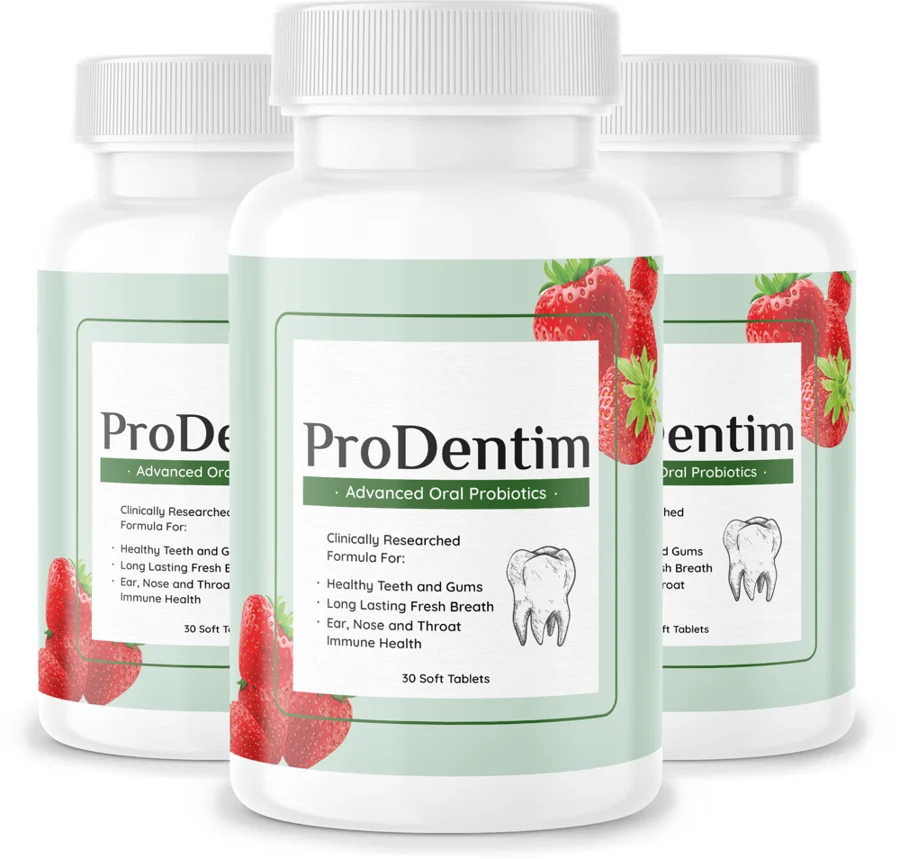
ProDentim at a Glance
| Form | Soft chewable tablet — 30 per bottle; the brand says to chew one slowly each morning |
| Core ingredients | 3.5 billion probiotics (L. paracasei, L. reuteri, B. lactis BL-04) plus inulin, malic acid, tricalcium phosphate and peppermint |
| Made in | Country not stated on the official page; the FAQ only mentions an inspected facility with strict standards — ask support |
| Guarantee | 60 days, counted from the day the order is delivered |
| Shipping (US) | $9.99 on 2 bottles; free on the 3- and 6-bottle packages (confirm at checkout) |
| Main caution | Live probiotics — ask a doctor first if you are immunocompromised, pregnant, nursing or seriously ill |
Bleeding when you floss, breath that never feels quite fresh, or a dentist who keeps mentioning "early gum inflammation" — these are some of the most common reasons people start looking at oral health supplements. In the last few years a new idea has taken over this corner of the market: instead of only killing germs with mouthwash, you add beneficial bacteria to the mouth, the same way people take probiotics for digestion.
ProDentim is one of the best-known products built on that idea. It is a chewable tablet that combines three probiotic strains with a prebiotic fiber, a fruit acid, a calcium mineral and peppermint. In this review we look at what the official website actually discloses, which parts of the marketing hold up, what independent research says about each ingredient, who should be careful, and exactly how the price and refund policy work.
→ See the full ProDentim formula on the official website
What Is ProDentim?
ProDentim is a dietary supplement sold as a soft chewable tablet for teeth, gums and breath. The bottle label calls it "Advanced Oral Probiotics" and lists 30 soft tablets per bottle, which works out to about a one-month supply at the suggested dose of one tablet a day. The official page describes it as a blend of 3.5 billion probiotic bacteria plus a proprietary blend of four plant and mineral ingredients.
Beyond the mouth, the label also mentions "ear, nose and throat immune health", and the FAQ goes further, saying the tablet supports the respiratory system, sleep and digestion. Those are broad claims, and we come back to them below. The product is sold online only, through a sales page that opens with a video presentation and a separate text version.
The page states the formula is non-GMO, gluten free, free of stimulants and not habit-forming. It does not publish a full Supplement Facts panel in text, so you cannot see the amount of each strain, the sweetener used in the tablet, or the sugar content before buying.
How ProDentim Is Said to Work: Marketing Claims vs. Evidence
The sales story runs like this: decay and gum problems are caused less by "bad" bacteria than by a lack of "good" bacteria; everyday toothpaste and mouthwash contain harsh ingredients that wipe out the good ones; and chewing ProDentim repopulates the mouth so teeth and gums can stay healthy. As supporting evidence the page points to a 2022 finding that people with healthy teeth tend to have more beneficial bacteria in their mouths, and to the fact that teeth survive for thousands of years in fossils.
Some of this rests on real science. The oral microbiome is an active research field, and it is true that a healthy mouth has a different bacterial balance from a mouth with gum disease. It is also reasonable to think that adding friendly strains could, in principle, nudge that balance. Several probiotic strains have been tested in the mouth, with small but measurable effects on gum bleeding and plaque in some trials.
Other parts of the pitch go too far. An association between healthy teeth and "good" bacteria does not show that a chewable tablet causes healthier teeth. The fossil comparison ignores the obvious: teeth outside a living mouth are not exposed to food, sugar and acid every day. And the suggestion that ordinary toothpaste is harmful contradicts the position of the US National Institute of Dental and Craniofacial Research, which recommends fluoride toothpaste as a cornerstone of preventing tooth decay. Whatever you decide about ProDentim, keep brushing with fluoride and keep your dental check-ups.
Finally, the reference list on the official page leans heavily on news articles, blogs and general reviews rather than trials of the product. No clinical study of ProDentim as a finished product is linked.
ProDentim Ingredients and What the Research Says
The official page names seven ingredients: three probiotic strains and a four-ingredient proprietary blend. It gives the combined probiotic count (3.5 billion) but not the amount of each strain, and no amounts at all for the blend. Here is what is known about each one.
1. Lactobacillus paracasei
L. paracasei is a lactic acid bacterium found in fermented dairy and the human gut. Some strains have been studied for their ability to stick to and interfere with cavity-associated bacteria such as Streptococcus mutans, mostly in laboratory work and a handful of small human studies. Results depend heavily on the specific strain, and ProDentim does not name a strain code for this species, so the research cannot be matched to the tablet directly. The page also links this strain to sinus comfort, a claim with little human evidence behind it.
2. Lactobacillus reuteri
L. reuteri is probably the most studied probiotic in dentistry. Randomized trials using lozenges or chewing gum with specific reuteri strains have reported lower gum bleeding and gingivitis scores than placebo — for example, a German trial in pregnant women with lozenges taken from the third trimester, and an earlier Scandinavian study with probiotic chewing gum. Effects were modest, the studies were small, and they used defined strains and doses. It is a sensible ingredient to see, but ProDentim does not state which reuteri strain it uses or how much.
3. Bifidobacterium lactis BL-04
BL-04 is a named, commercially produced strain of B. lactis, which is a point in the formula's favor because named strains can be traced. Most BL-04 research relates to the gut and to respiratory symptoms rather than the mouth. A related B. lactis strain (HN019) was tested as an add-on to professional treatment in a Brazilian randomized trial of people with periodontitis and gave better results than the cleaning alone. That is encouraging for the species, but it was a different strain, and it was used together with dental treatment, not instead of it.
4. Inulin
Inulin is a plant fiber, often from chicory root, that feeds beneficial bacteria in the gut and is classed as a prebiotic. Its role in the mouth is less clear: it is not broken down in the mouth the way it is in the colon, and there is no strong evidence that it helps oral probiotics settle. In larger amounts inulin can cause gas or bloating, though the quantity in a single tablet is likely small.
5. Malic Acid
Malic acid is the tart acid found in apples and strawberries. The page links it to keeping teeth white. Malic acid does stimulate saliva and has been tested in sprays for dry mouth, but there is no solid evidence that a chewable tablet whitens teeth. It is worth remembering that acids in general can soften enamel; the amount in one tablet is not disclosed, and chewing it once a day is unlikely to matter much, but it is one more reason not to brush immediately after taking it.
6. Tricalcium Phosphate
Tricalcium phosphate is a common calcium and phosphate source used in foods and supplements, and calcium phosphate compounds are used in some remineralizing toothpastes. In a chewable tablet it mainly provides minerals and acts as a filler. There is no published evidence that the small amount in ProDentim strengthens enamel on its own.
7. Peppermint
Peppermint gives the tablet its flavor and a fresh feeling in the mouth. Laboratory studies show peppermint oil has antibacterial activity against some oral bacteria, and the page describes it as anti-inflammatory. In practice, its main contribution here is taste and a short-term fresh breath effect.
Taken together, the formula is built in a logical way: three probiotics with at least some dental research behind the species, plus supporting ingredients. The weak points are the missing strain codes for two of the three bacteria, the undisclosed amounts and the absence of any trial of the finished tablet. Broader reviews of probiotics for gingivitis and periodontitis describe the overall evidence as promising but of low to moderate quality.
Prefer a chewable probiotic over capsules or mouthwash? Check ProDentim's current packages on the official site.
Visit the Official ProDentim Website →Pros and Cons of ProDentim
Pros
- Chewable format keeps the probiotics in the mouth, where they are meant to act
- Includes L. reuteri and a named B. lactis strain (BL-04), two of the better-researched species for oral health
- Simple routine: one tablet a day, 30 tablets per bottle
- Labeled non-GMO, gluten free and stimulant-free
- 60-day money-back guarantee counted from delivery, with free US shipping on the larger packages
Cons
- No clinical trial of the finished product is published
- Strain amounts and proprietary blend doses are not disclosed
- Sweetener and sugar content are not shown in the page text
- Marketing overstates the science and casts doubt on toothpaste, which dental authorities recommend
- Refunds require returning all bottles at your own shipping cost
Who Might Consider ProDentim (and Who Should Not)
ProDentim may suit adults who:
- already brush twice a day with fluoride toothpaste, clean between their teeth and see a dentist regularly
- want to try an oral probiotic as an extra step rather than a replacement for dental care
- prefer a chewable tablet to capsules or lozenges
- are prepared to use it daily for two to three months and judge the results honestly
It is not a good fit, or should only be used after medical advice, for people who:
- have a weakened immune system, are receiving chemotherapy, have a central venous catheter or have recently had major surgery
- are pregnant or breastfeeding, or want to give it to a child — the page says it suits all ages, but its own disclaimer asks pregnant or nursing women and anyone on medication to check with a doctor first
- have heart valve disease or a history of endocarditis, where dentists and doctors are already careful about bacteria entering the bloodstream
- have bleeding, swollen or receding gums, loose teeth, a persistent sore or tooth pain — these need a dental examination, not a supplement
Safety and Side Effects
No serious side effects have been publicly reported for ProDentim as a finished product, and the ingredients are common in foods and supplements. The National Center for Complementary and Integrative Health notes that probiotics have a good safety record in healthy people, with mild, short-lived digestive effects such as gas being the most common complaint.
The same agency points out that the risk is different for people who are seriously ill or immunocompromised, in whom live bacteria have, rarely, caused infections. That is the main reason to talk to a doctor first if you fall into one of the groups above. Other practical points:
- Allergies: the page does not publish a full allergen statement or list of inactive ingredients. If you have food allergies, ask support for the complete label before ordering.
- Sugar and sweeteners: the FAQ calls the tablet a "candy" but does not say how it is sweetened. People watching their blood sugar may want to confirm this.
- Antibiotics: taking an antibiotic at the same time may reduce the effect of live probiotics; ask your pharmacist about spacing them.
- Medicines in general: the official disclaimer asks anyone on prescription medication or with a medical condition to consult a physician first, which is sensible advice.
If you notice swelling of the mouth or throat, a rash, or ongoing stomach upset, stop taking it and seek medical advice.
How to Use ProDentim
The official FAQ recommends chewing one tablet slowly every morning. A bottle holds 30 tablets, so one bottle lasts about a month. The page does not say whether to take it before or after brushing; taking it after your morning routine, rather than just before, avoids brushing the bacteria straight off and gives the tablet time in contact with teeth and gums.
Let the tablet dissolve slowly instead of swallowing it quickly, and avoid rinsing with an antiseptic mouthwash right afterwards. Store the bottle in a cool, dry place, because heat and moisture reduce the number of live bacteria in any probiotic. The refund policy itself suggests using the product for about three months before judging it, which matches the length of most oral probiotic trials. Keep simple notes — gum bleeding when flossing, how your breath feels in the morning — so you can compare honestly.
ProDentim Price, Shipping and Guarantee
ProDentim is sold in three packages on the official order page. The per-bottle prices appear inside images rather than in the page text, so treat the figures below as what the page displayed at the time of writing and confirm them at checkout:
| Package | What the official order page shows |
|---|---|
| 2 bottles (about 60 days) | $79 per bottle, plus $9.99 shipping |
| 2 + 1 bottles (about 90 days) | $69 per bottle, free US shipping |
| 3 + 3 bottles (about 180 days) | $49 per bottle, free US shipping, 3 digital bonus guides |
| US delivery | About 5 to 7 working days |
| Canada, UK, Ireland, Australia, NZ | $15.95 shipping, about 10 to 15 working days |
| Guarantee | 60 days from the delivery date |
One small inconsistency: the shipping table on the page lists US shipping as free, while the 2-bottle package shows a $9.99 shipping charge. Check the total on the checkout screen before paying. The bonus guides with the six-bottle package are e-books about breath and at-home teeth habits; they are extras, not part of the product.
What We Saw on the Official ProDentim Order Page (October 12, 2026)
On October 12, 2026 we opened the official order page ourselves and followed the checkout up to the payment step, without placing an order, to record exactly what a buyer sees. The screenshots below are unedited crops from that visit.
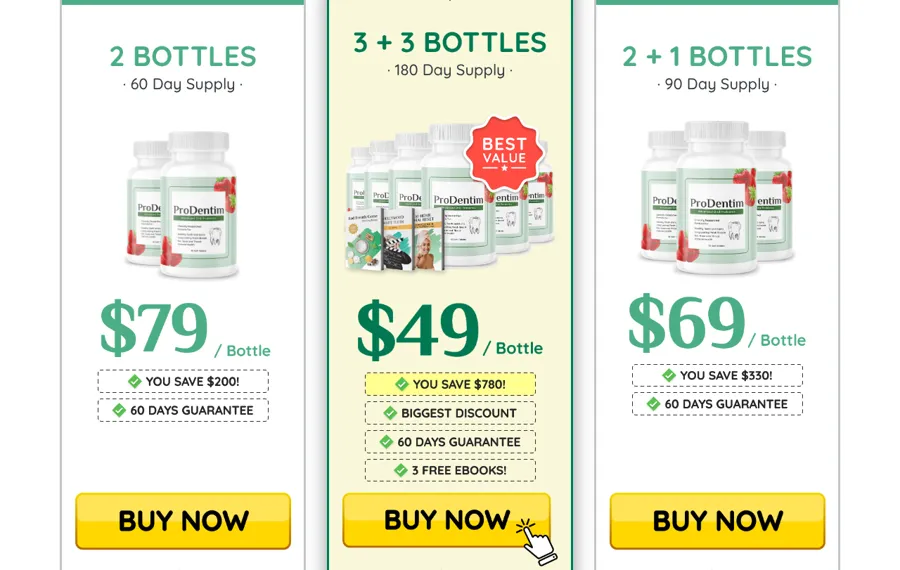
- The order page offered 2 bottles at $79 per bottle, 2 + 1 bottles at $69 per bottle and 3 + 3 bottles at $49 per bottle; the two larger bundles included free US shipping and bonus e-books.
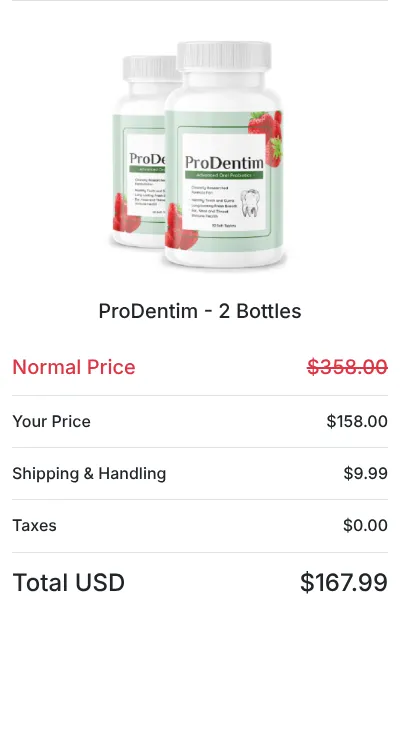
- Choosing the 2-bottle bundle took us to a separate secure checkout showing $158.00 plus $9.99 shipping and handling, $0.00 tax, $167.99 total. The 2 + 1 bundle came to $207.00 and the 3 + 3 bundle to $294.00, both with $0.00 shipping.
- The refund page says you have 60 days from the day the package is delivered, not from the order date, and lists contact@prodentim-product.com as the contact address.
Refund Policy: What the Terms Actually Say
The sales page describes the guarantee as "no questions asked", and the separate refund policy page explains the process. The 60 days start on the day your order is delivered, so keep the tracking number. You email the support team with "Refund Request" in the subject line, then send back all bottles — opened, unopened or empty — together with the packing slip and a note with your name, email and order number.
Two details are easy to miss: the customer pays the return postage, and refunds are processed after the package arrives, with the bank taking roughly 5 to 10 days to show the credit. If you are buying the six-bottle package, keep the box and slip until you are sure you want to keep the product.
→ Check today's ProDentim price and packages on the official website
Where to Buy ProDentim
ProDentim is sold through its official website, which hands you over to the official order page for payment. Listings on marketplaces, auction sites or unfamiliar web stores may be old stock, may not have been stored properly — which matters for live bacteria — and are not covered by the 60-day refund policy. Ordering from the official page is the most reliable way to get a genuine product and the guarantee.
ProDentim vs. Other Oral Health Options
It helps to see where ProDentim sits among the alternatives:
- Fluoride toothpaste and flossing: the best-supported daily habits for preventing decay and gum disease. ProDentim does not replace them.
- Professional cleaning: only a dental professional can remove hardened tartar. Most positive probiotic trials added probiotics to cleanings rather than using them alone.
- Single-strain probiotic lozenges: some products use one clearly named strain at a stated dose, which makes it easier to match them to published studies.
- Look-alike chewables: some other oral probiotic brands list the same seven ingredients as ProDentim. If you compare, look at the price per tablet, the guarantee terms and whether doses are disclosed.
Final Verdict
ProDentim has a reasonable idea at its core. Oral probiotics are a legitimate research area, and the formula includes L. reuteri and a named B. lactis strain, both of which belong to species with some dental research behind them. The chewable format is practical, the routine is simple, and the 60-day guarantee lowers the financial risk if you follow the return rules.
The limits are just as clear. There is no published trial of the tablet itself, the doses are hidden, and the sales story oversells the science while casting unfair doubt on fluoride toothpaste. If you are a healthy adult who already looks after your teeth and you are curious about oral probiotics, ProDentim is a reasonable product to try for about three months under its guarantee. Keep realistic expectations: a supplement can support a good routine, but it does not replace brushing, flossing or your dentist.
Frequently Asked Questions (FAQs)
Has the FDA evaluated ProDentim?
No. Dietary supplements are not reviewed by the FDA for effectiveness before sale, and the official page itself says its statements have not been evaluated by the FDA. Comments about the manufacturing facility concern production standards, not proof that the product works.
How long does ProDentim take to work?
The refund policy suggests using it for at least three months. Most oral probiotic studies lasted from a few weeks to three months, so give it around 90 days and track gum bleeding and breath.
Can ProDentim replace toothpaste or dental visits?
No. Fluoride toothpaste, cleaning between teeth and professional cleanings remain the foundation of oral health. ProDentim is meant as an extra, and the brand states it is not intended to diagnose, treat, cure or prevent any disease.
Does ProDentim have side effects?
No serious side effects have been publicly reported. Probiotics can cause mild gas or bloating at first. People who are immunocompromised, seriously ill, pregnant or nursing should ask a doctor before using live probiotics.
How many tablets are in a bottle of ProDentim?
Each bottle contains 30 soft chewable tablets. At one tablet a day, that is about a one-month supply.
What is ProDentim's refund policy?
You have 60 days from delivery. Email support with "Refund Request" in the subject, then return all bottles, even empty ones, with the packing slip. Return shipping is paid by the customer.
Want to compare the current ProDentim packages and bonuses? The official site shows today's prices.
Visit the Official ProDentim Website →References
- NCCIH (NIH). Probiotics: What You Need To Know.
- National Institute of Dental and Craniofacial Research (NIH). Tooth Decay.
- Schlagenhauf U, et al. Regular consumption of Lactobacillus reuteri-containing lozenges reduces pregnancy gingivitis: an RCT. J Clin Periodontol. 2016;43(11):948-954.
- Twetman S, et al. Short-term effect of chewing gums containing probiotic Lactobacillus reuteri on the levels of inflammatory mediators in gingival crevicular fluid. Acta Odontol Scand. 2009;67(1):19-24.
- Invernici MM, et al. Effects of Bifidobacterium probiotic on the treatment of chronic periodontitis: a randomized clinical trial. J Clin Periodontol. 2018;45(10):1198-1210.
- Gruner D, Paris S, Schwendicke F. Probiotics for managing caries and periodontitis: systematic review and meta-analysis. J Dent. 2016;48:16-25.
- Yoo JI, et al. The effect of probiotics on halitosis: a systematic review and meta-analysis. Probiotics Antimicrob Proteins. 2019;11(1):150-157.
- Mu Q, Tavella VJ, Luo XM. Role of Lactobacillus reuteri in human health and diseases. Front Microbiol. 2018;9:757.
This review is for general information only and is not medical advice. Product details (ingredients, prices, guarantee) come from the official ProDentim pages as checked in October 2026; they can change, so confirm them at checkout. Talk to your doctor before starting any supplement, especially if you take prescription medication or have a health condition.